Check the practical details first
Look at the gallery’s current opening hours, entry requirements, and photography policy before visiting. Some spaces are free to enter, while others require tickets or appointments. Choose a visit that fits your time and access needs. You do not have to cover a whole exhibition in one afternoon. Knowing the practical details frees you to spend attention on the work rather than wondering whether you are in the right place or have enough time to stay.
Let your eye make the first choice
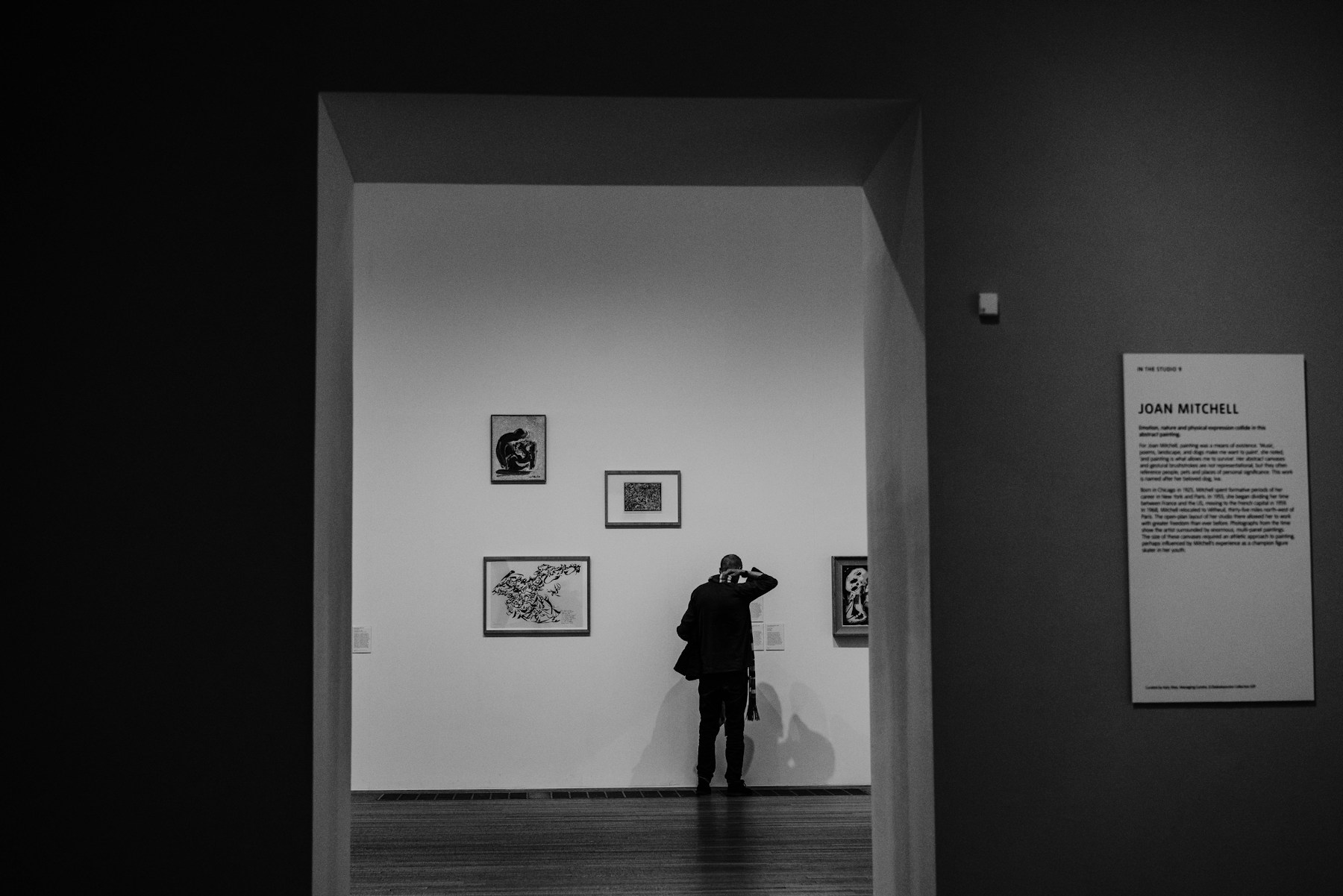
Walk through the space and notice the work that draws you closer. It might be a color, a surface, or a shape you cannot quite explain. Spend a little time looking before reading the label. Describe what you can actually see rather than guessing the correct interpretation. Then return to the information and notice whether it adds a new direction. Looking and learning can take turns without one making the other less personal.
Ask an ordinary question
If staff are available, ask about a material, the exhibition, or where to find further information. You do not need specialist language to be curious. Keep the conversation respectful of other visitors and the space. If you disagree with a work or feel unmoved, consider what led to that response. You can leave without choosing a favorite. A thoughtful visit includes your questions and uncertainty as much as the pieces you immediately enjoy.
Take one detail into the rest of the day
Write down a title, an impression, or something you want to look up later. If photography is permitted, use it as a memory aid without letting the camera replace looking. Notice whether a detail changes how you see a street, a room, or an everyday object afterwards. That connection can be the most personal souvenir. The value of a gallery visit does not depend on knowing everything, buying something, or producing a polished opinion on the way out.
Published by Spee24. Our editorial approach.
Explore Culture